Lessons · Tue Sep 22, 2026 · Scripture
Isaiah 25 — "We Have Waited for Him"
Isaiah 13–14; 22; 24–30; 35
The principle
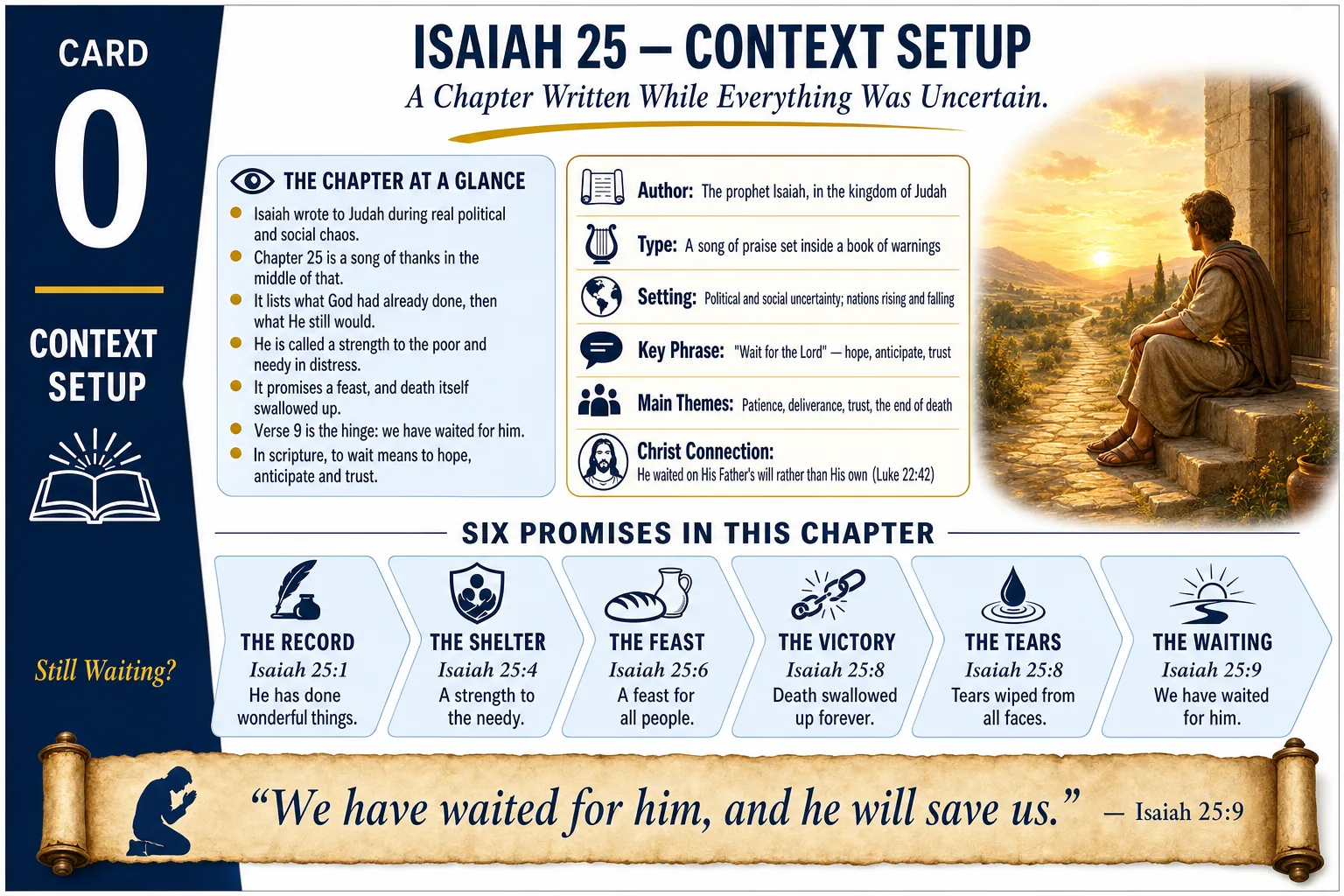
If we wait for the Lord, we will be glad and rejoice in His salvation.
What the lesson is for
Help students name the thing they are actually waiting on God for, and see waiting as trust and hope rather than as being ignored.
Personal study, first ten minutes
Isaiah 25:1–4, 6–9
What had the Lord already done for Israel, and what had He promised still to do? In verse 9, what does He ask of them in the meantime?
The deck
Click any card to see it full size.
Teacher notes
Supplies, board work and timing. Never printed on the cards.
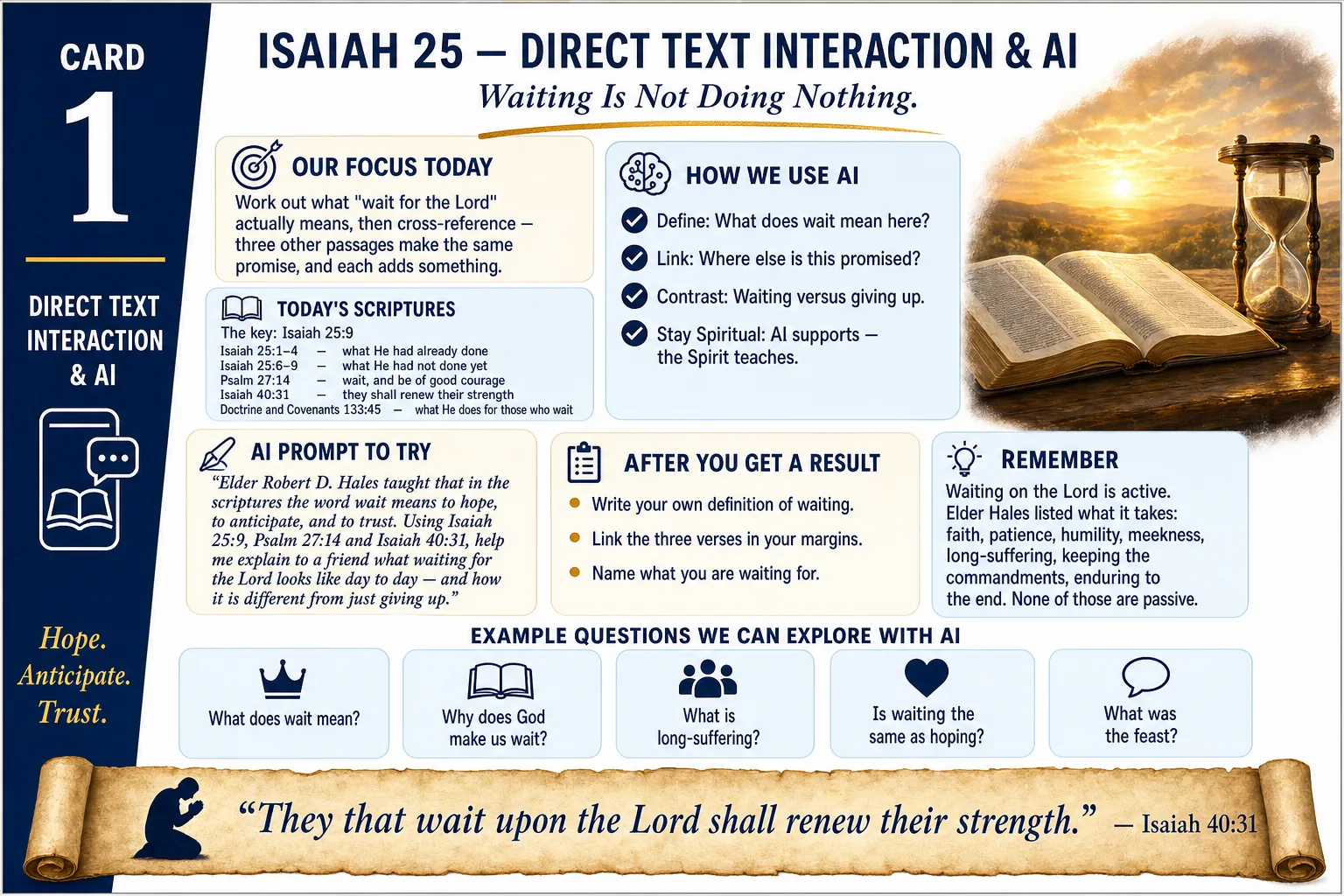
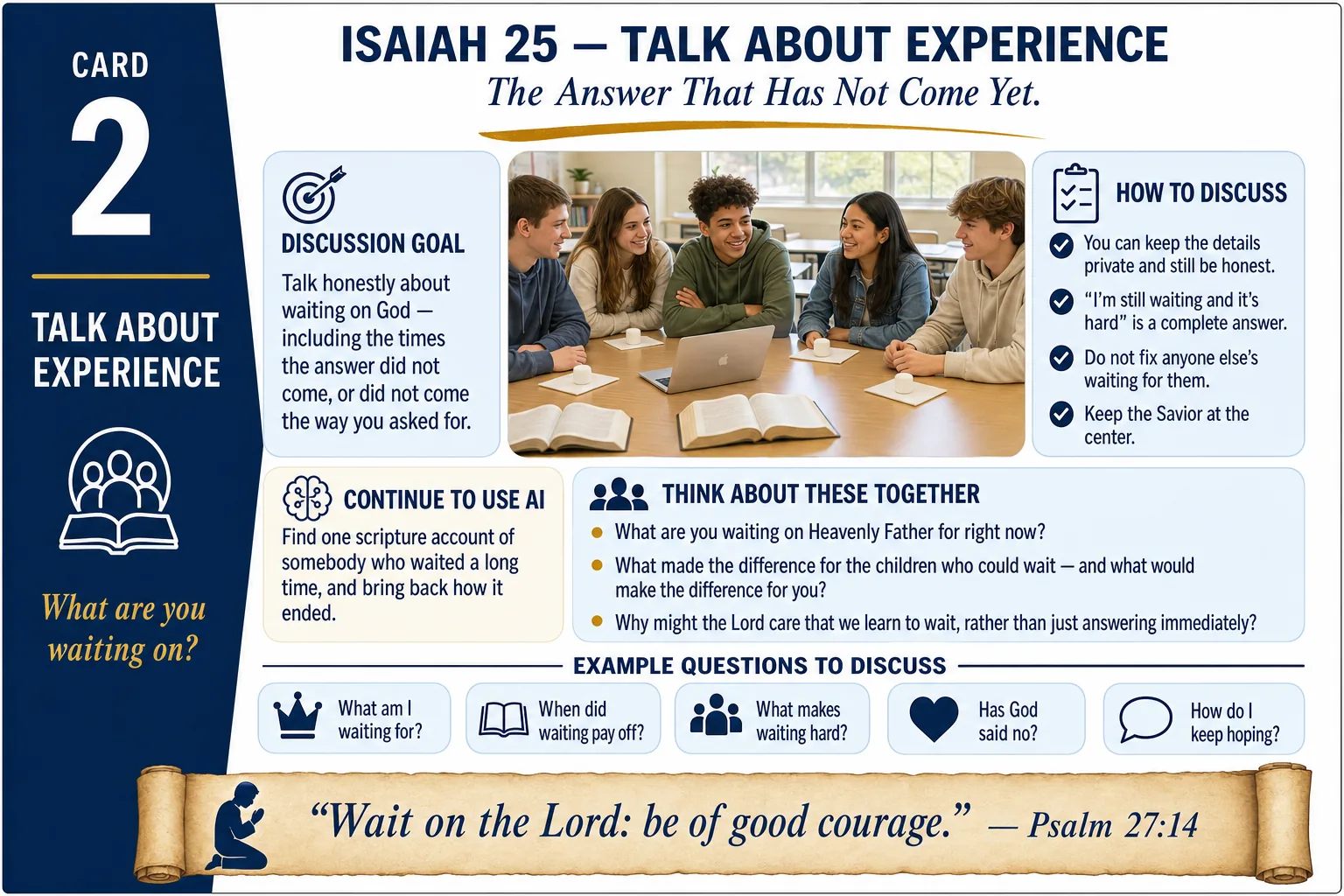
SUPPLIES: a bag of large marshmallows — actually run it. Put one in front of each student, tell them they can eat it now or wait until the end of class for two, and then teach the whole lesson with the marshmallow sitting there. It is the best possible object lesson for this chapter and it costs three dollars. (Only about 30 percent of the four-year-olds in the original study could wait; tell them that afterwards, not before.) ELDER HALES is the key definition and should go on the board: in the scriptures, wait means to HOPE, to ANTICIPATE, and to TRUST — not to sit still doing nothing. Isaiah wrote this to Judah in a chaotic time of political and social uncertainty, which is worth saying out loud. CROSS-REFERENCING is the study skill today: Psalm 27:14, Isaiah 40:31, D&C 133:45 all pay the same promise. BE CAREFUL on the self-assessment — some of these students are waiting on something heavy (a sick parent, a testimony that has not come). Do not promise them a timeline. The promise in verse 9 is that He will save, not that He will hurry.
Journal prompt
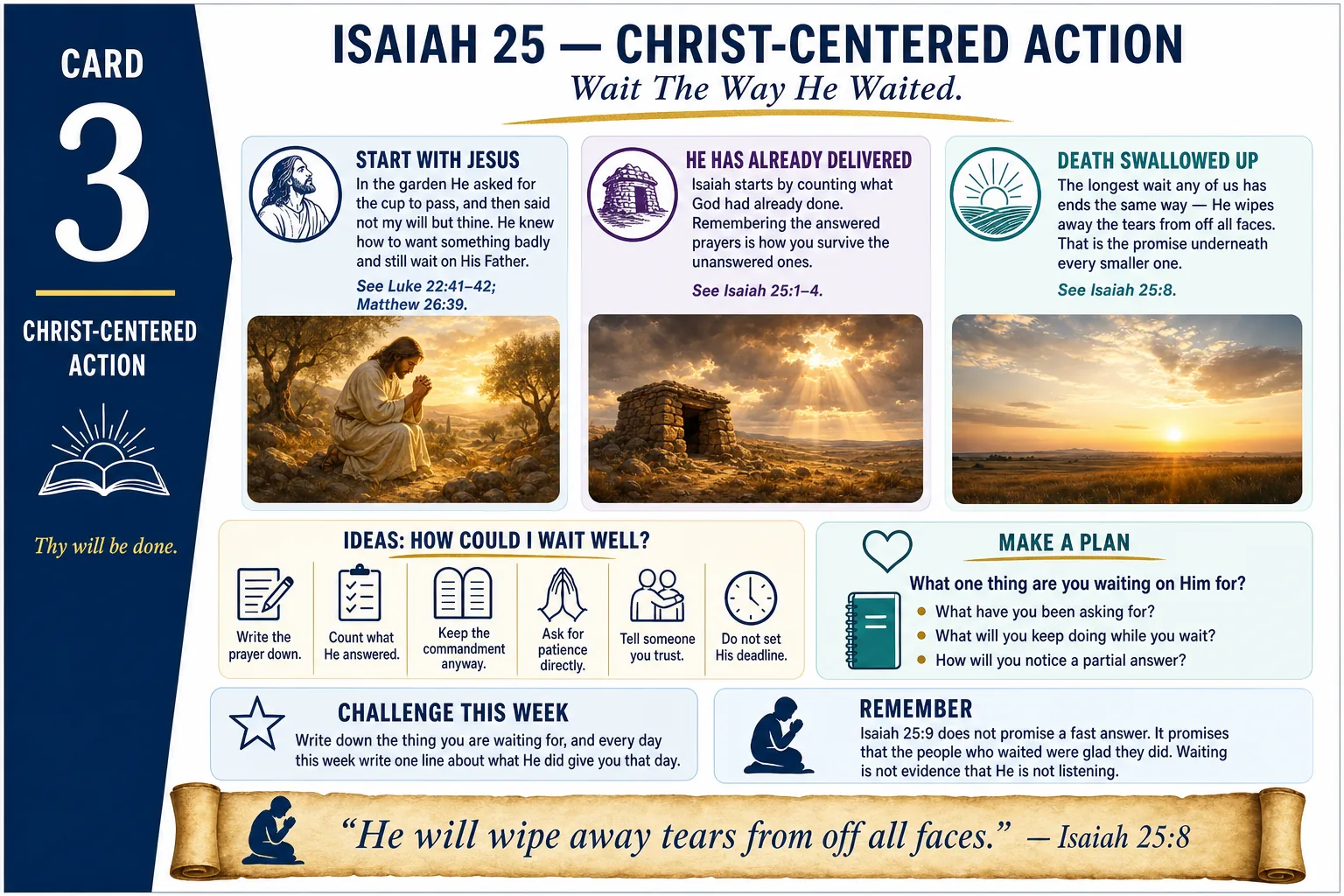
The last five minutes. Card 3 hands into this.
Name one thing you are waiting on Heavenly Father for. Write what makes the waiting hard, then write your own definition of what it means to wait for the Lord. Finish by writing one thing you will keep doing while you wait.