Lessons · Wed Aug 26, 2026 · Scripture
Psalms 61–86 — "Give Ear to my Prayer, O God"
Psalms 49–51; 61–66; 69–72; 77–78; 85–86
The principle
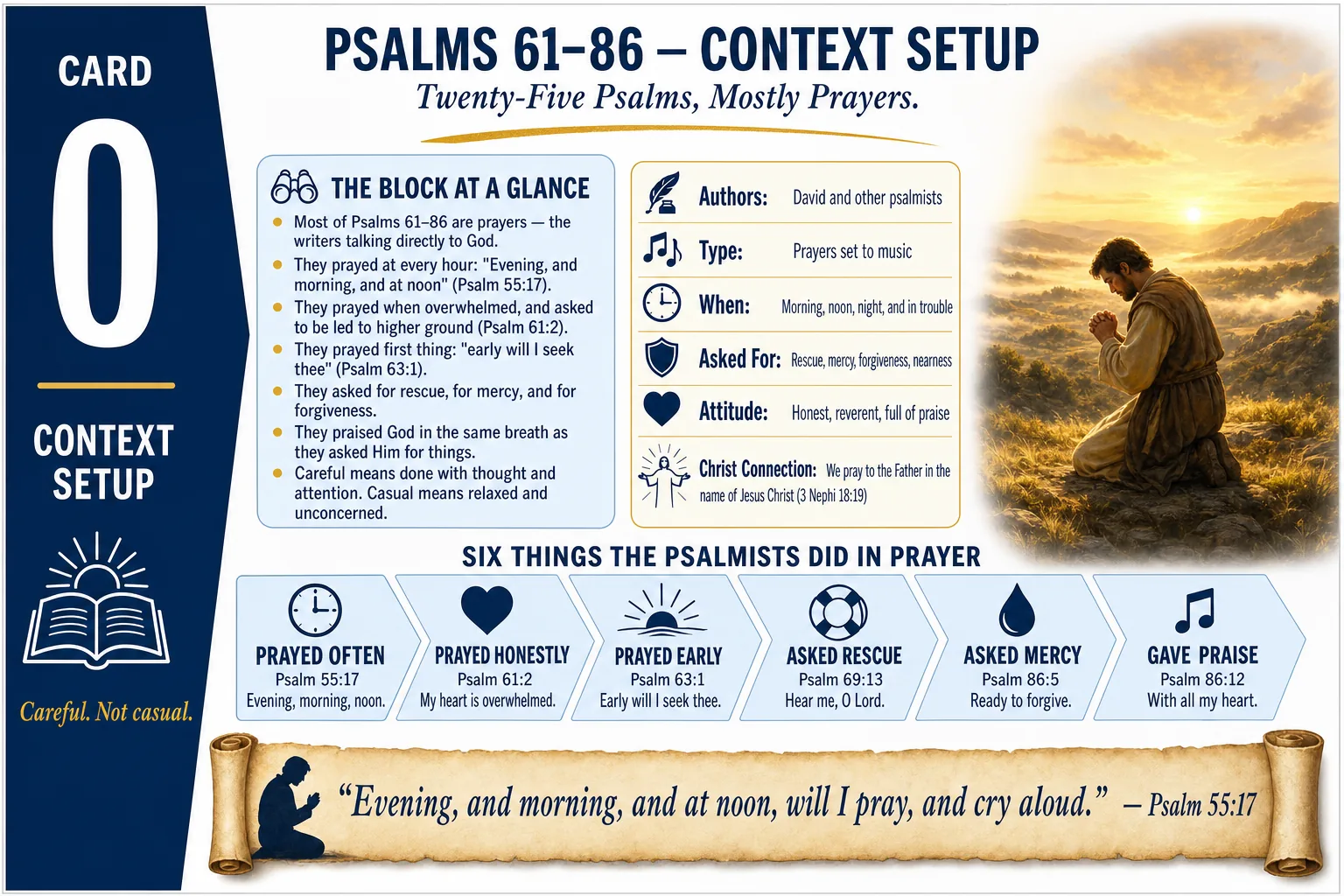
Our prayers to Heavenly Father become more meaningful as we approach Him carefully, honestly, and often.
What the lesson is for
Help students communicate more meaningfully with Heavenly Father by learning from the psalmists' prayers — when they prayed, what they asked, and the attitude they brought.
Personal study, first ten minutes
Psalm 63 and Psalm 86
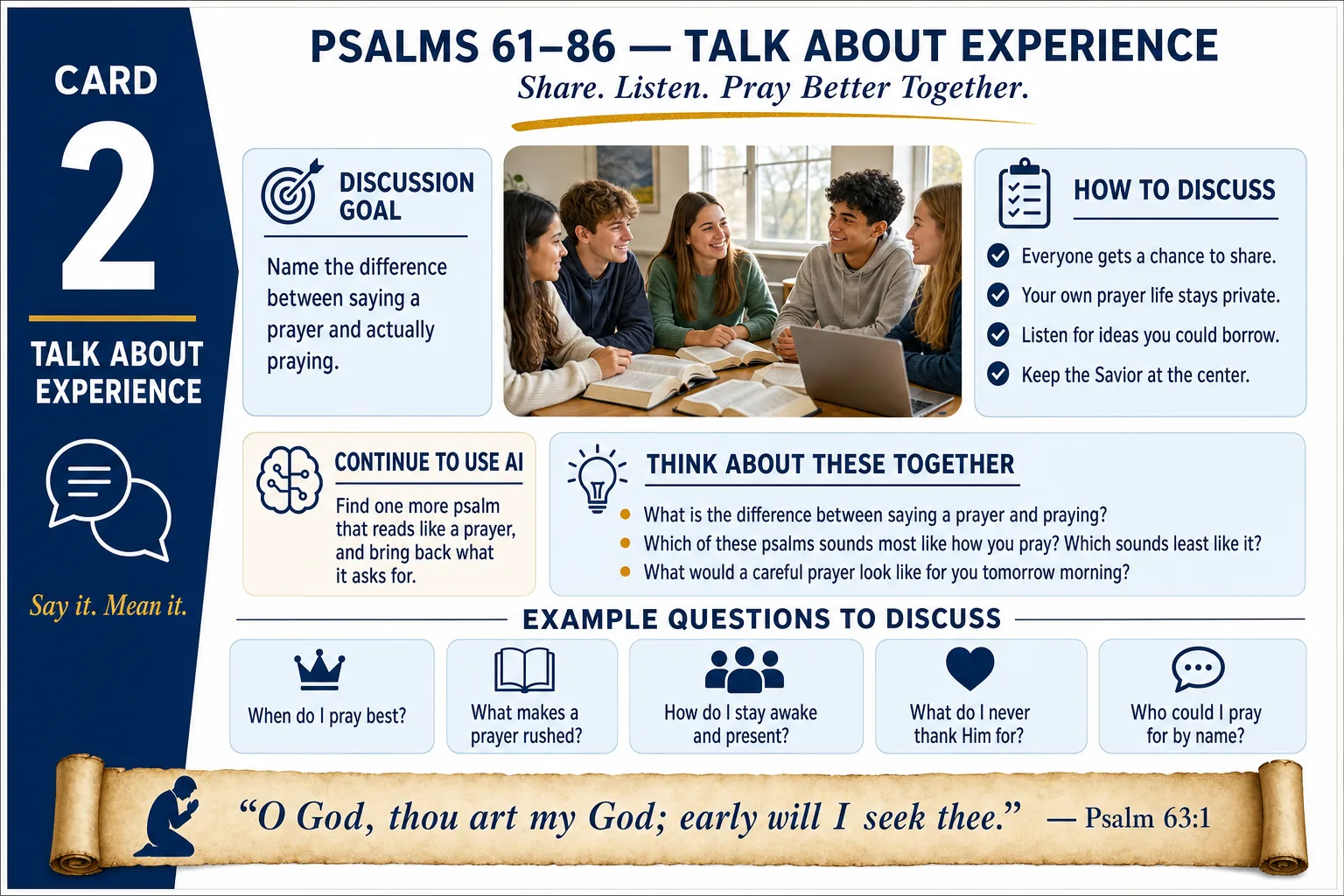
When is the writer praying, what is he asking for, and how does he talk to God? Mark anything you would not have thought to say.
The deck
Click any card to see it full size.

Teacher notes
Supplies, board work and timing. Never printed on the cards.
The manual's opener works well: write 'careful' and 'casual' on the board, define them (careful = done with thought or attention; casual = relaxed or unconcerned), and have students describe both in a sport, an instrument, and schoolwork before applying it to prayer. Their self-assessment stays private — say so out loud. Consider quiet instrumental music during the study block.
Journal prompt
The last five minutes. Card 3 hands into this.
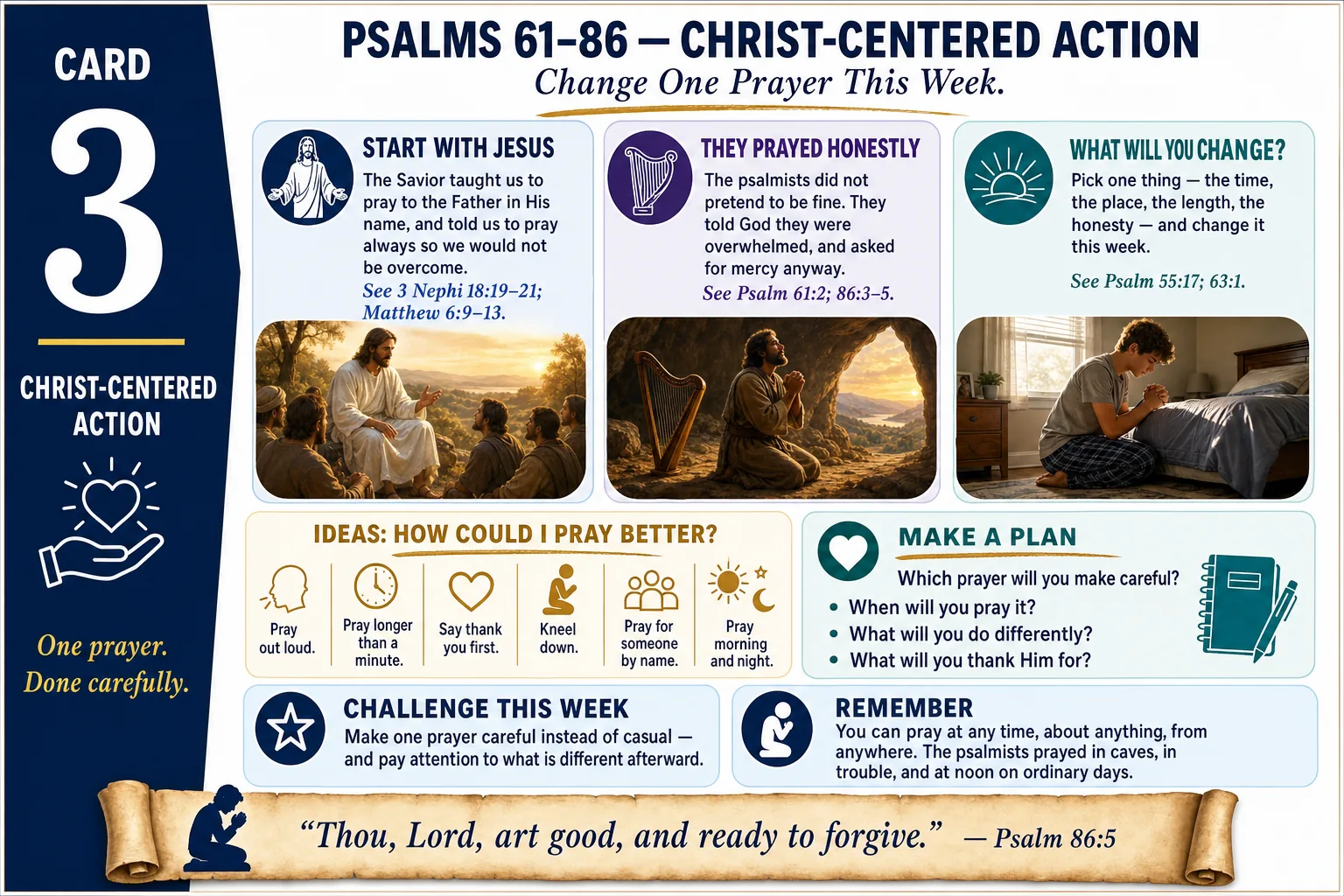
Finish this sentence in your own words: my prayers to Heavenly Father can become more meaningful as I ______. Then write down which prayer this week you will make careful instead of casual, and when you will pray it.