Lessons · Tue Oct 27, 2026 · Scripture
Jeremiah 36 — "Take Thee Again Another Roll"
Jeremiah 31–33; 36–38; Lamentations 1; 3
The principle
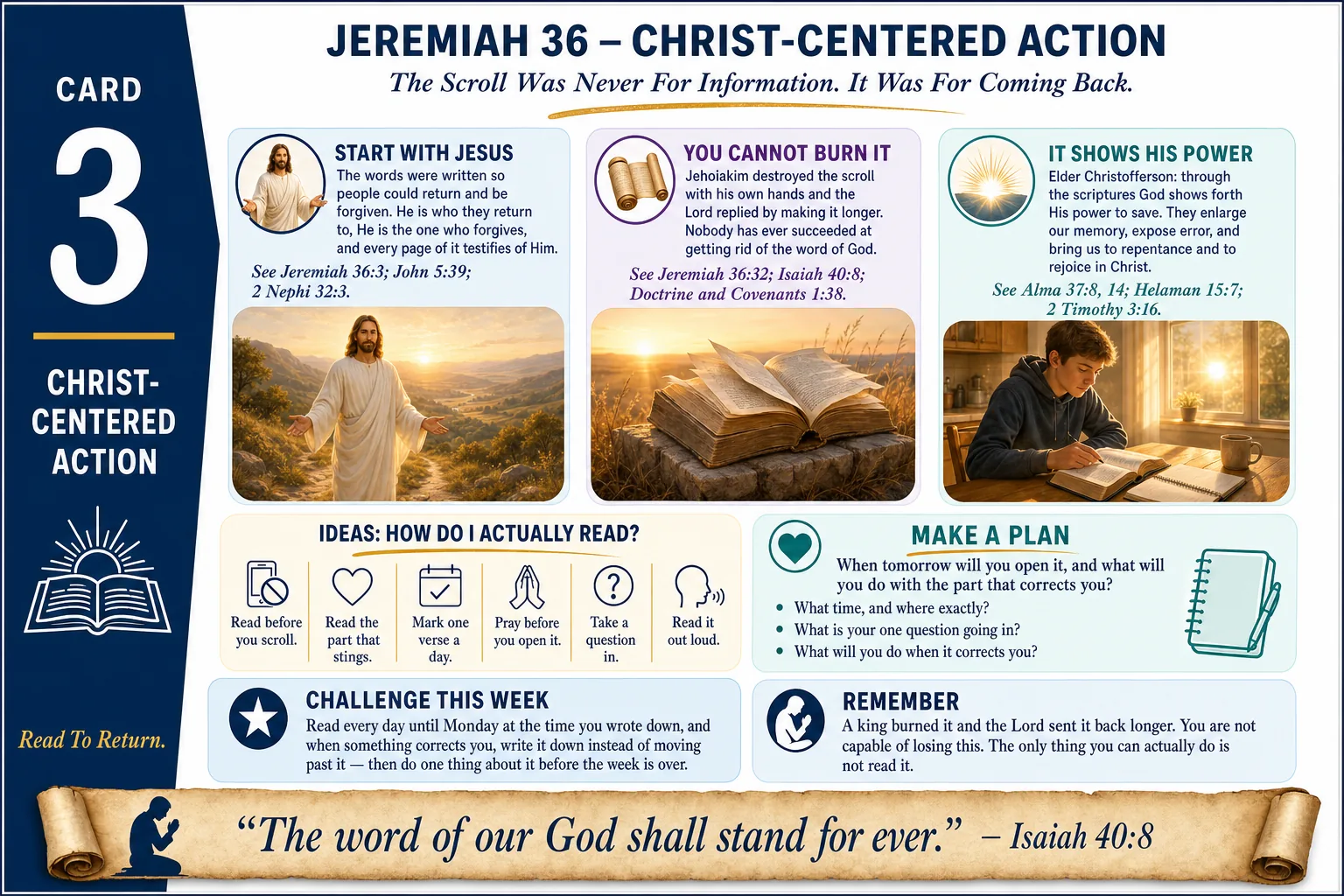
The scriptures were given so that we would turn to the Lord and be forgiven. That is their purpose — not information. The word of God outlasts everyone who has ever tried to be rid of it; the only thing anyone can really do is not read it.
What the lesson is for
Let students watch a king destroy the word of God and get a longer one back, name the modern ways of never reaching the part that would correct them, and leave with a time tomorrow morning and one question to take into the text.
Personal study, first ten minutes
Jeremiah 36:1–3, 20–24, 27–28, 32
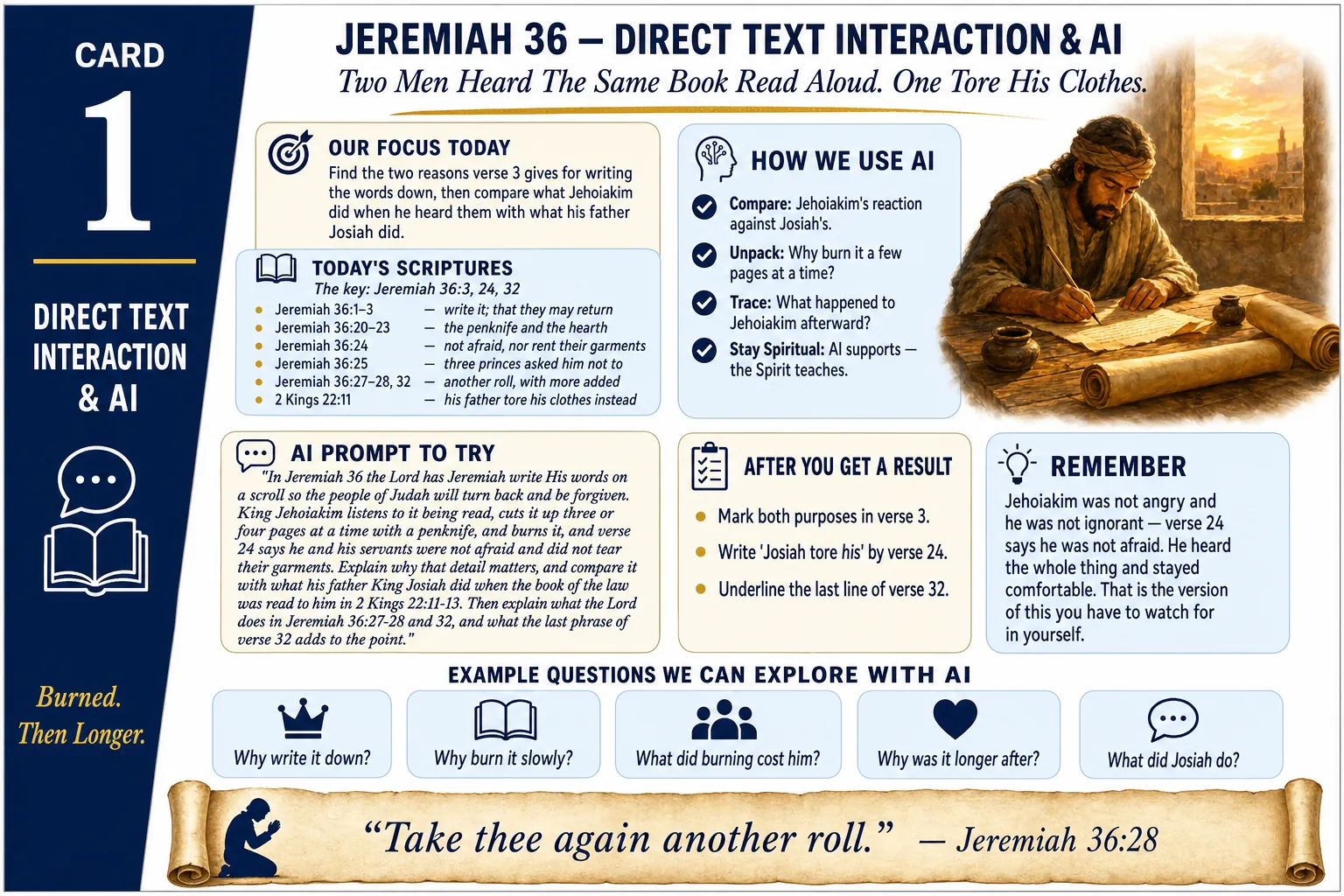
Read verses 1 to 3 and find the two reasons the Lord gives for writing the words down — both of them are in verse 3, and neither one is 'so they would know more.' Then read 20 to 24 and watch exactly what the king does with the scroll while it is being read to him. Finish at verse 32 and find the four words at the end that say what happened to the book after it burned.
The deck
Click any card to see it full size.
Teacher notes
Supplies, board work and timing. Never printed on the cards.
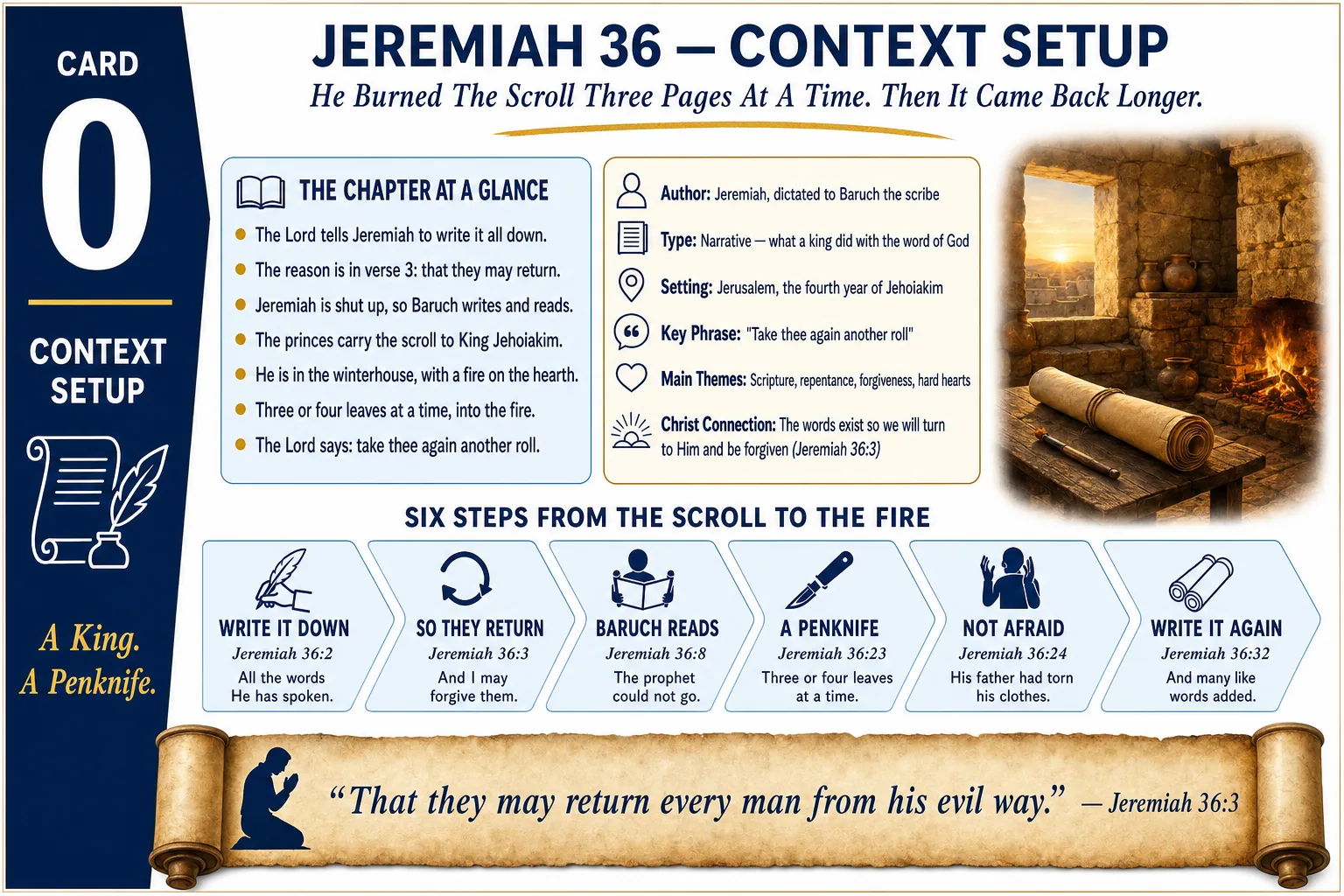
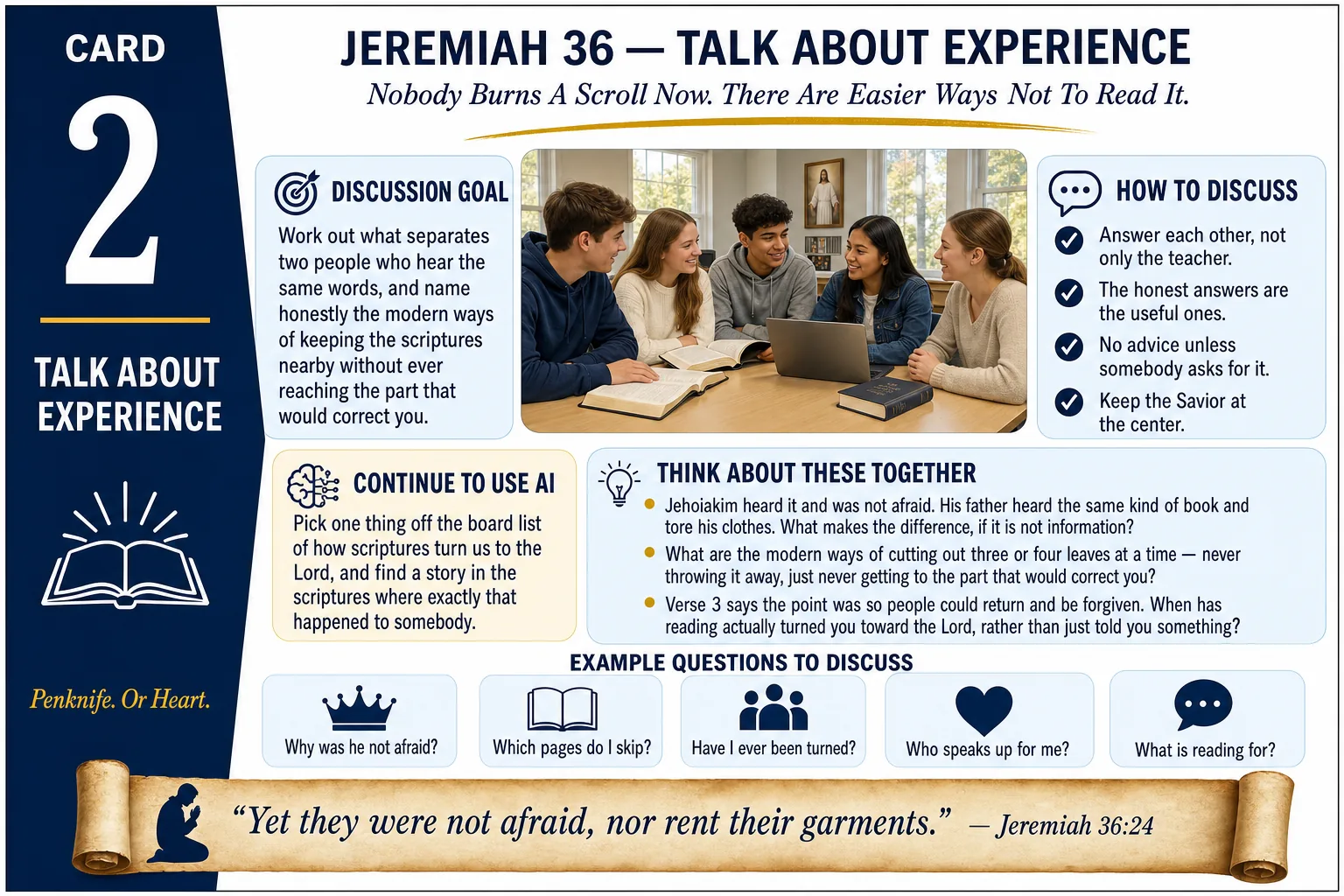
START AT THE PURPOSE, NOT THE STORY, or the story will eat the lesson. Jeremiah 36:3 gives the reason the words were written: 'that they may return every man from his evil way; that I may forgive their iniquity and their sin.' Have them mark both phrases and write the truth beside them — the scriptures help us turn to the Lord and receive His forgiveness. That is the doctrine of the day and everything else is evidence for it. THE MANUAL'S OPENER IS BETTER THAN IT LOOKS AND IT IS TWO MINUTES: how would someone who cares about you respond if you had food in your teeth? If you were about to walk into a party you were excited for and they knew what was happening there? What makes a person speak up, and what happens if they stay quiet? Then the turn: Heavenly Father and Jesus Christ see what we do not, They want the best for us, and the scriptures are how They speak up (2 Nephi 32:3; Doctrine and Covenants 1:37–38). The scriptures are a friend telling you the truth, and you already know how you react to that. BUILD THE BOARD LIST BEFORE THE STORY. Ask how the scriptures help us turn to the Lord and be forgiven, write every answer, then hand out 2 Timothy 3:16, Alma 37:8 and Helaman 15:7 and have them add to it. Keep the list up — it is what the princes argue with in the role-play. TELL THE STORY YOURSELF, IT IS WORTH NINETY SECONDS OF NARRATION. Jeremiah was shut up and could not go, so Baruch wrote the words and read them aloud at the temple, then to the princes, who took the scroll to King Jehoiakim (36:4–10, 14–15, 20–21). THE DETAIL IS THE WHOLE POINT: the king was in the winterhouse with a fire on the hearth, and as Jehudi read three or four leaves the king cut them off with a penknife and threw them in the fire, piece by piece, until the whole roll was gone (36:22–23). He did not throw the book across the room. He sat there and did it a few pages at a time, while it was being read. Ask them what kind of person does it that way. 36:24 IS THE VERSE THAT CARRIES THE LESSON AND IT NEEDS THE CROSS-REFERENCE TO LAND: 'Yet they were not afraid, nor rent their garments.' Jehoiakim's father was Josiah, and when the book of the law was read to Josiah he tore his clothes and sent to inquire of the Lord (2 Kings 22:11–13). Same family, same house, the same kind of book read out loud — and opposite responses. Put the two verses side by side on the board. The difference is not information; both men heard it. VERSE 25 IS FOR THE ROLE-PLAY. Elnathan, Delaiah and Gemariah 'had made intercession to the king that he would not burn the roll: but he would not hear them.' Threes, each student one prince, and they prepare what they would say to the king using the board list. Have one group come up; you be the king, which is safer than making a student be the one who refuses. Let them try to persuade you and do not fold too fast — then take the manual's option and let a group play the ending where the king is persuaded. Follow it with the real question: what modern situation would that same argument help a young person with? THEN VERSE 32, AND DO NOT GIVE IT AWAY EARLY. The Lord tells Jeremiah to take another roll and write all the former words in it, and the chapter ends: 'and there were added besides unto them many like words.' He burned it and got a longer one. Let a student be the one to notice. That is the moment the class will remember in five years. ELDER CHRISTOFFERSON IS THE CLOSE: 'Through the scriptures, God does indeed show forth his power to save and exalt His children. By His word … He enlarges our memory, sheds light on falsehood and error, and brings us to repentance and to rejoice in Jesus Christ, our Redeemer' ('The Blessing of Scripture,' Ensign or Liahona, May 2010, 33). Alma 37:14 is the 'show forth his power' reference he is citing; have them turn to it. THIS IS THE RIGHT DAY FOR THE READING GOALS, so use it. Seminary required reading and personal study goals both come up naturally here, and the manual asks for it. But make the ask about turning rather than about pages — the question is not whether they are caught up, it is whether reading has ever actually turned them toward the Lord. Ask it that way and you will get an honest answer. GIVE THEM TIME TO WRITE BEFORE THEY TALK on the reflection question; the manual says so and it is right. Thirty seconds of silence changes the quality of what comes back. THEME LINK, PANEL FOUR, AND IT IS EXACT: pride — 'I'm fine.' I am not thirsty. Jehoiakim is panel four sitting in a warm room by a fire, cutting up the only thing that could have told him the house was coming down. He was not ignorant and he was not angry; he was comfortable. The tell for panel four is not hostility, it is a man who is not afraid. Do not let them picture a villain. THE WEEK: Monday He writes His law in your heart, today you meet the man who burned the words that do the writing, Wednesday you find out what He does when you break it anyway, Thursday you go to His house. TIMING: the speak-up opener two minutes, purpose and the board list six, the story and the penknife five, Josiah alongside it three, the role-play eight, verse 32 and Christofferson four, reading goals and the reflection two, journals at 7:05. If you run long, cut the role-play to one group — but do not cut verse 32 and do not cut Josiah.
Journal prompt
The last five minutes. Card 3 hands into this.
Write the time tomorrow morning you are going to read, and where you will be sitting. Then write the one question you are taking in with you — a real one you actually want answered. Underneath, answer this honestly and nobody will read it: which three or four leaves have you been cutting out? Name the part of the gospel you keep not getting to, and write what you would have to be afraid of, in the good way, for that to change.